
ESMI Award 2026
SIMON R. CHERRY, UC Davis
Distinguished Research Professor in the Departments of Biomedical Engineering and Radiology at UC Davis & Professor of Total Body Imaging at KCL
Reflections – Forty Years in Academia: Navigating a Life in Imaging Science
Simon R. Cherry’s contributions to imaging science, most notably the innovation of total-body PET, have fundamentally transformed the field.
“Simon truly deserves this recognition for his outstanding scientific contributions to the field, and for his unwavering perseverance, passion, and visionary thinking. Beyond being such an outstanding, open-minded, curious scientist, Simon is a mentor, a role model, and a friend to so many. We can hardly think of anyone closer to our hearts who deserves this award. It is truly an honour for the ESMI to count Simon among its community.”

Simon R. Cherry, Ph.D. received his B.Sc. in Physics with Astronomy from University College London in 1986 and a Ph.D. in Medical Physics from the Institute of Cancer Research, University of London in 1989. In 1993, he became a faculty member in the Department of Molecular and Medical Pharmacology at UCLA. Simon joined UC Davis in 2001 as Distinguished Research Professor in the Departments of Biomedical Engineering and Radiology. In 2025 Simon joint King’s College in London as Professor of Total Body Imaging.
Simon’s research interests center around biomedical imaging. His major contributions have been in developing systems for positron emission tomography. He is as co-leader of the EXPLORER consortium which developed the world’s first total-body PET scanner. Simon has also contributed to detector technology innovations for PET, conducted early biomedical studies using Cerenkov luminescence, and developed the first proof-of-concept hybrid PET/MRI systems.
Trailblazer Lecture 
The Trailblazer Lecture celebrates a scientist whose work has advanced beyond early-career recognition. It shines a light on a rising leader whose trajectory points unmistakably toward lasting impact and excellence at the highest level:
MARKITA DEL CARPIO LANDRY, UC Berkeley
Associate Professor Chemical and Biomolecular Engineering & Neuroscience
Near infrared molecular imaging of brain chemistry

The Landry Lab develops synthetic bio-mimetic nanocomposites to impart control over nanomaterial interactions with biological systems for two applications:
- to exploit the intrinsic nanomaterial infrared fluorescence for molecular imaging, and
- to exploit the highly tunable chemical and physical properties of nanomaterials for targeted delivery of biological cargoes.
Markita earned her bachelor’s degrees at the University of North Carolina, where she majored in both chemistry and physics. She moved to the University of Illinois for doctoral studies and earned a Ph.D. in chemical physics. Markita was a National Science Foundation postdoctoral scholar at MIT and performed research at both the Technical University of Munich and Osaka University.
In 2016, she was appointed to the faculty at Berkeley. She heads the Landry Lab on Optical Nanomaterials & Single-Molecule Research Group.
KATHERINE W. FERRARA, Stanford
Professor of Radiology and the Division Chief for the Molecular Imaging Program
Optimizing drug and gene delivery with molecular imaging

Prof. Katherine Ferrara received her PhD in 1989 from the University of California, Davis. Prior to her PhD, she was a project engineer for GE Medical Systems, involved in the development of early magnetic resonance imaging and ultrasound systems. Following an appointment in the Department of Biomedical Engineering at the University of Virginia, Charlottesville, Katherine served as the founding chair of the Department of Biomedical Engineering at UC Davis.
Her laboratory is known for work in molecular imaging and drug delivery. Major areas of interest include the fusion of images between ultrasound, PET, MRI and CT, the development of activatable drug delivery vehicles, and the development of molecularly-targeted drug delivery vehicles. Members of our laboratory bring expertise in many areas including biomedical engineering, physics, electrical engineering, chemical engineering, mechanical engineering, computer science, material science, chemistry, and biology.
METIN SITTI, Istanbul
President of Koç University in Istanbul, Former Director of the Physical Intelligence Department at the Max Planck Institute for Intelligent Systems in Stuttgart
Wireless medical milli/microrobots for theranostic applications
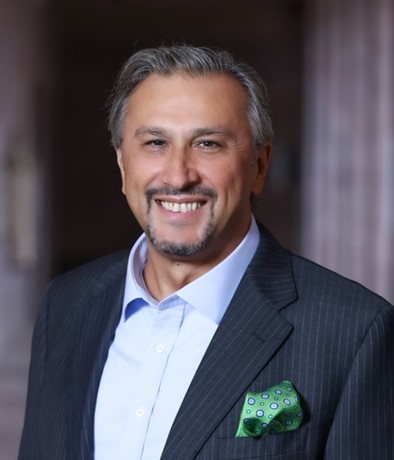
Prof. Dr. Metin Sitti is the President of Koç University in Istanbul, Turkey since fall 2023. Formerly, he was a Director of the Physical Intelligence Department at Max Planck Institute for Intelligent Systems, Germany (2014-2023), Professor at ETH Zurich, Switzerland (2020-2024), Professor at Carnegie Mellon University, USA (2002-2014), and Research Scientist at UC Berkeley, USA (1999-2002). He received his BSc (1992) and MSc (1994) degrees from Boğaziçi University, Turkey, and PhD degree from University of Tokyo, Japan (1999). His research interests include wireless medical devices, small-scale mobile robots, bioinspiration, and physical intelligence.
Metin was previously a Research Scientist at UC Berkeley and a Professor in the Department He is a member of National Academy of Engineering in USA, Academy Europea, and Max Planck Society (2014-2023). He received the Highly Cited Researcher recognition (2021-2025), Frontiers of Science Award (2025), Materials Science Leader Award (2023-2025), Breakthrough of the Year Award in the Falling Walls World Science Summit (2020), ERC Advanced Grant (2019), Rahmi Koç Science Medal (2018), SPIE Nanoengineering Pioneer Award (2011), and NSF CAREER Award (2005). He has supervised and mentored over 70 (18 current) PhD students and 80 (10 current) postdocs, where over 65 of his group alumni are professors around the world. He has published 2 books and over 430 journal articles and has over 30 patents. He is the editor-in-chief of Journal of Micro-Bio Robotics and associate editor in Science Advances journal.
Read more about his work at Google scholar.

Basic Timeline
- 30 Sep. 2025 | Opening Abstract Submission
- Beginning of Nov. | Opening of Registration
- 18 Nov. | Deadline Abstract Submission
- 5 Jan. 2026 | Notification to Presenters
- 21 Jan. | Early Bird Registration Deadline